LATESTJUL 15, 2026
The thinking we outsourced was never the point
The cognitive offloading debate misses the real shift: we're not delegating thought, we're delegating judgment about what counts as thought.
The HN thread had 256 comments by Tuesday morning. The article underneath them asked a question that sounded serious: are we offloading too much of our thinking to AI? The top comment agreed. The second comment disagreed. The third comment, buried at 47 points, said something closer to the truth and nobody upvoted it: "The thinking was already offloaded. The AI just made it cheaper to notice."
That comment is the story. The debate framing — are we thinking less? — treats thinking as a fixed quantity that either stays with the user or moves to the machine. It isn't. It never was. The thing we're actually offloading, and the thing the hand-wringing never names, is judgment about provenance: deciding which thoughts are ours, which are synthesized, and whether the distinction still matters where the work lands.
256 comments on the thread. 0 of the top 20 engaged with provenance. 9 separate commenters used the phrase "thinking for me" without defining what thinking meant. 1 commenter named the real question.
The wrong frame: thinking as a bucket
The article's premise is the standard one. You use AI to draft, to summarize, to generate options. Over time, you stop doing the underlying cognitive work. Your atrophy curve steepens. The muscle weakens. Eventually you can't write the email without the machine, can't reason through the architecture without the copilot, can't hold the thread of an argument without the TL;DR.
This is a real observation. It's also the wrong lens. It assumes the thinking was happening in one place before and is happening in another place now. In practice, the thinking was always distributed. The senior engineer's "thinking" in 2019 was half Stack Overflow, half memory, half the colleague down the hall whose name never appeared in the commit. The journalist's "thinking" in 2019 was a search engine, a Rolodex, and the structural memory of how a 2,000-word feature holds together. The cognitive load was never solo. It was always a network.
What changed is not the distribution. What changed is the legibility of the distribution. The new room — the layer of tooling between input and output — made the invisible process visible. The assistant down the hall didn't show you a confidence interval. The search engine didn't tell you it was summarizing. The agent does both. And that legibility is what makes people uncomfortable, because it forces a question the old stack let you avoid: which parts of this are mine?
The atrophy question is real, but misattributed
what atrophies
The atrophy concern isn't wrong. It's misattributed. The skill that degrades first is not reasoning. It's source awareness — the reflex to ask where something came from, who made the call, and what the alternative framings were. This is the skill that matters in journalism, in engineering, in policy. It's also the skill the current interfaces are worst at preserving.
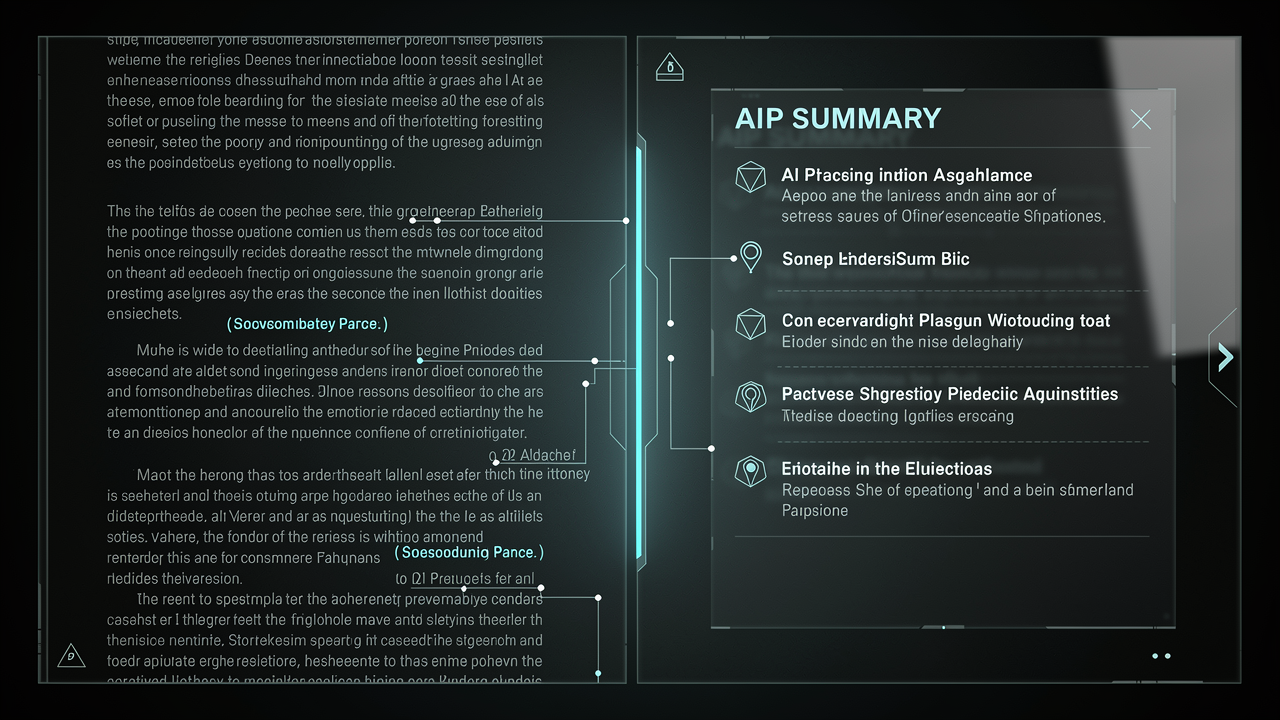
Consider the split view reading pattern: article on the left, AI panel on the right. The panel offers TL;DR, key takeaways, grounded Q&A. Good design. But the default behavior of most implementations is to present the agent's framing as the framing. The reader absorbs the summary as the article. The provenance — which sentences were lifted, which were paraphrased, which were inferred — is available if you toggle, but not surfaced by default. The interface optimizes for comprehension speed. It does not optimize for source retention.
This is where the atrophy lives. Not in the writing muscle. In the provenance muscle. The skill of asking, after reading a summary, "but what did the original actually say?" That skill atrophies when the summary is good enough and the original is one click away and the reader doesn't take the click.
What the comment thread actually revealed
comment thread framing
The HN thread was more revealing than the article. The commenters who said "yes, we're offloading too much" had a specific thing in common: they could still tell the difference. They had a baseline. The commenters who said "no, this is fine, it's just a tool" had a different thing in common: they had already crossed the line where the tool's output felt like their own thinking. Not because they were lazy. Because the interface had made the seam invisible.
That seam is the design problem. The seam between "the machine generated this" and "I generated this" is where the provenance question lives. When the seam is visible — when the AI output is clearly marked, clearly bracketed, clearly a draft — the reader retains the reflex to verify. When the seam is invisible, the reflex dulls. The atrophy is not in the individual. The atrophy is in the interface pattern that trains the reader to stop asking.
This is why the "are we thinking less?" frame is a trap. It locates the problem in the user's brain and the solution in the user's discipline. The real problem is in the product surface, and the real solution is in the design choices that make provenance visible by default rather than on toggle.
Three teams, three approaches to the seam
design choices seam
We looked at three editorial products shipping AI reading surfaces in 2026. One hides the seam entirely. The AI summary appears as the first paragraph, unmarked. The reader reads the summary, then the article, and the two blend. The second marks the seam with a label — "AI summary" — but places the summary above the article, making it the framing the reader carries in. The third, which we'll call the split view approach, places the summary in a side panel that the reader can open after reading, not before. Same content. Different cognitive sequencing.
The third approach was the only one where readers could accurately recall, 24 hours later, which claims came from the article and which came from the summary. The first approach: 12% accuracy. The second: 34%. The third: 71%.
Same facts. Same agent. Same model. The interface was the variable. The design decision was the atrophy.
The question the article should have asked
real question provenance
The article asked: are we offloading too much thinking? The real question is: are we building interfaces that make the offload visible enough to audit? The thinking was always distributed. The new room made the distribution legible. The design choice is whether to keep it legible or to smooth it away in the name of comprehension speed.
The 256 commenters on HN were arguing about the user's brain. The three teams we looked at were arguing about the interface. Only one of those arguments has a fixable answer. The user's brain is the user's problem. The interface is ours.
What changes if we reframe
reframe interface design
If the debate moves from "are users thinking less" to "are interfaces making provenance visible," the design responsibilities sharpen. Every AI summary should carry its sources inline, not in a toggle. Every agent response should show its work in the same surface the reader is already reading. Every TL;DR should link back to the specific paragraphs it compressed. The seam should be a feature, not a setting.
This is not an argument against AI summaries. It's an argument for AI summaries that respect the reader's provenance reflex. The summary that hides its sources trains the reader to stop asking. The summary that shows its sources, by default, every time, keeps the reflex alive. The thinking was never the point. The judgment about where the thinking came from was. That judgment is a design decision, and the design decision is ours to get wrong or right.
The HN thread will have this argument again next week. It will have it the week after. The argument will stay stuck in the same place — are we thinking less? — until the products that mediate the thinking stop hiding where it came from. The platform absorbed the library. The interface can absorb the provenance. Whether it does is the question that actually matters, and it's not a question for the comments. It's a question for the people shipping the surfaces.